
📝 Steven Burr
The Moon
September starts off with the Full Corn Moon on the 7th. According to the Farmer’s Almanac, the name originates from the traditional period of harvesting corn. Shortly after the moon rise on the 12th, the waning gibbous moon passes within a degree of the star cluster Pleiades. On the 14th, we have the last quarter moon followed by a new moon on the 21st. A first quarter moon rounds off the month on the 29th.
The Planets
Venus remains visible in the early morning twilight. On the 19th just prior to sunrise, Venus and the waning crescent moon have a close conjunction with Regulus. Mars is now only visible in the evening twilight low on the western horizon. On the 12th of the month, Mars passes within 2° of Spica in the constellation of Virgo. Jupiter is now becoming more prominent in the early morning hours as its elongation from the Sun increases. For those with telescopes, there will be double shadows on Jupiter due to its moons on the 20th, 23rd and 30th. Saturn reaches opposition on the 21st and is now visible throughout most of the night in the constellation of Pisces.
Zodiacal Light & Autumnal Equinox
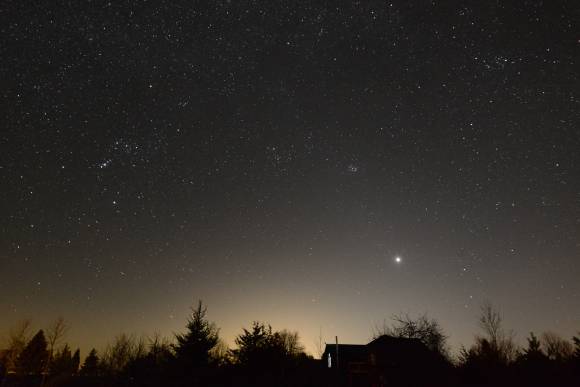
📷 Randy Boddam - Zodiacal Light
Starting around the 19th of the month, Zodiacal light will be visible for two weeks in the east just prior to the morning twilight. It will appear to be a cone of light above the Eastern horizon originating from sunlight reflecting off dust grains that orbit the sun in the inner solar system. Zodiacal light will appear closest to the Equinoxes as Earth is at an extreme angle to the ecliptic from which light from the Sun passes. The autumn equinox falls on the 22nd September and arrives at 2:19 pm for the Quinte area. It is at this time; the sun passes directly over the earth’s equator providing equal length of day and night.
Constellation Pegasus
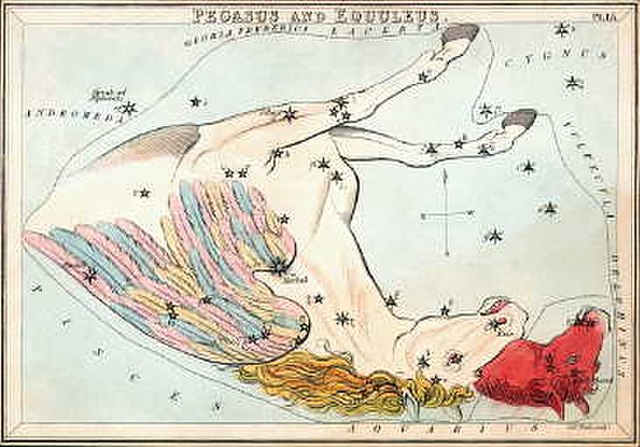
📸 Mirror 1825 - Pegasus Urania
Pegasus the winged horse is one of the largest constellations in the night sky and can be recognized by its prominent box shape. According to Greek mythology, it is the offspring of Poseidon and Medusa or the horse of Bellerophon, who defeated the monstrous Chimaira but died while trying to reach Olympus. This constellation existed long before the Greeks. The Babylonians considered this constellation the Horse. Located within this constellation is the M15 Great Pegasus Star Cluster discovered by Jean-Domonique Maraldi in 1746. The star cluster lies at a distance of 39,000 light years from earth and may contain over 1000,000 stars. For those with good eyesight or binoculars, it appear a fuzzy star.
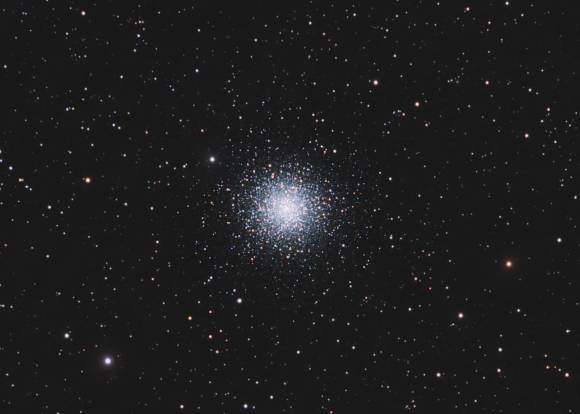
📸 Robert Bates - M15 Star Cluster
Check out upcoming events here!
References (for the August and September Blog posts):
Boeckmann, Catherine, Full Moon Names 2025 [online]. Almanac, updated January 2025 [cited 3 January 2025]. Available from: https://www.almanac.com/full-moon-names
Burnham, Robert, Burnham’s Celestial Handbook Vol 3 (New York: Dover Publications, 1978)
Edgar, James S. ed., RASC Observer’s Handbook 2025, ed. by James S. Edgar (Marquis Book Printing, 2024)
Hard, Robin, Eratosthenes & Hyginus: Constellation Myths (Oxford: Oxford University Press, 2015)
Mortillaro, Nicole, RASC 2025 Night Sky Almanac (Richmond Hill: Firefly Books, 2024)
Perseid Meteor Shower 2025 [online], Timeanddate, [cited 21 January 2025]. Available from: https://www.timeanddate.com/astronomy/meteor-shower/perseid.html
[1] Triangle d'ete Carte du ciel [online]. Wikimediacommons, updated 22 Sep 2024 [cited 24 Jan 2025]. Available from: https://commons.wikimedia.org/wiki/File:Triangle_d%27ete_Carte_du_ciel.svg
White, Gavin, Babylonian Star-Lore: An Illustrated Guide to the Star-Lore & Constellations of Ancient Babylonia (London: Solaria Publications, 2014)
Do you like this page?

