
📝 📸 John Lowry
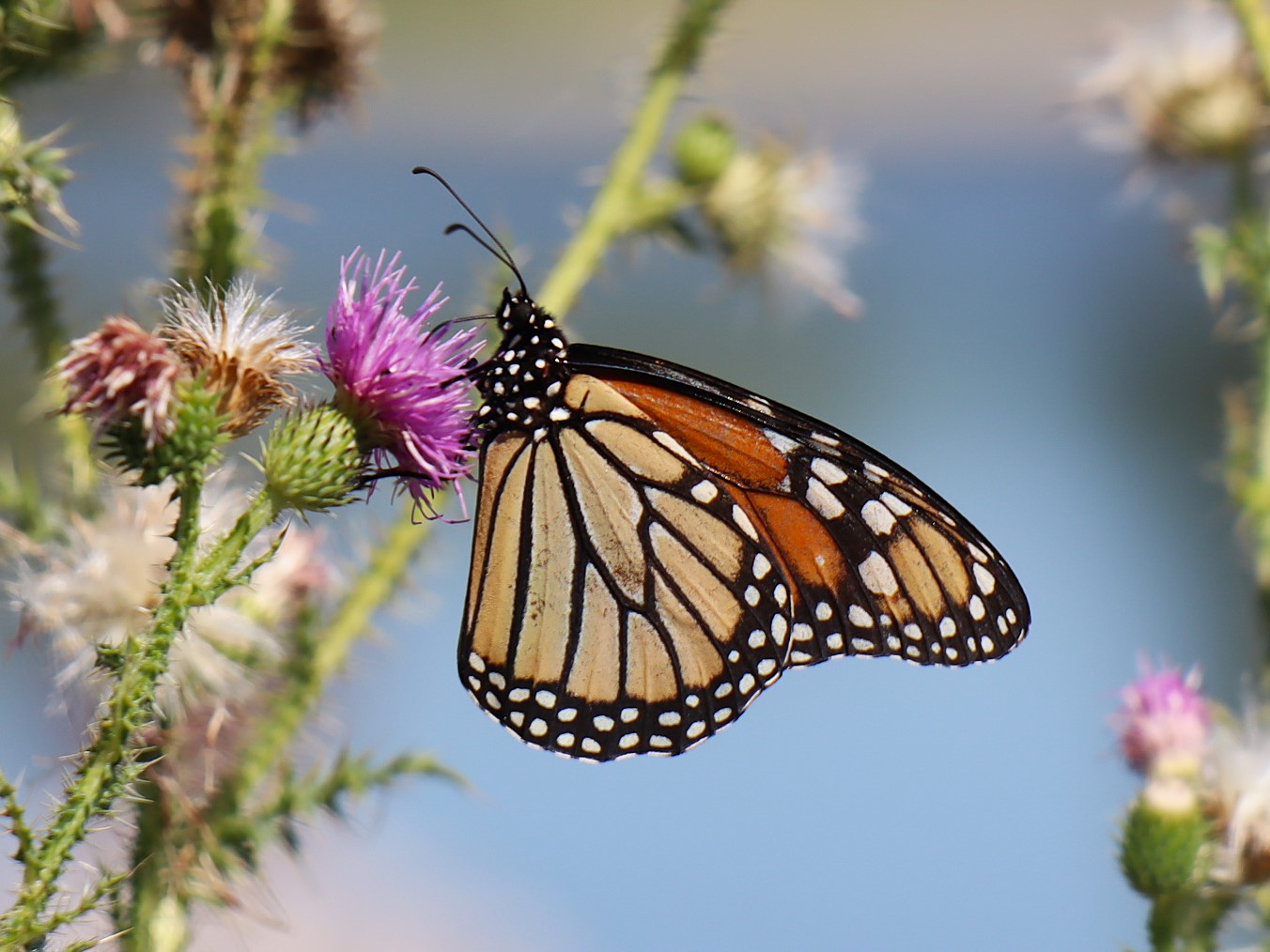
This year, the challenge has been waiting to see if Monarchs would rebound from very low numbers in 2024. Initial reports from their overwintering grounds in Mexico indicated a small increase in numbers, leading to cautious optimism among experts. However, the overall population trend still shows signs of decline.
The eastern population in North America has seen a "hopeful increase," but the western population has experienced a catastrophic decline, estimated to be down by 95%. There is a real concern that the western population may cease to exist.
Locally, the numbers for Southern Ontario are still down this year. Some areas report a slight increase over 2024, while others report lower numbers or no Monarchs sighted at all. One resident near the Black River reported fewer caterpillars and Monarchs this year compared to previous years.
As fall approaches, the Monarchs' legendary migration south has begun. One of the Prince Edward County property owners reported an impressive turnout of Monarchs feeding on flowering plants. Another resident in Belleville reported a congregation of Monarchs on their Meadow or Rocky Mountain Blazing Star plants.
Despite some bright spots, the future of this iconic butterfly is still very much of concern. Researchers, including University of Guelph recent study, urge Canada, the United States, and Mexico to cooperate on a coordinated conservation strategy to save the Monarch butterfly, whose population has declined by approximately 80% in the last 20 years due to habitat loss. The recommended strategy involves restoring and protecting Monarch breeding and overwintering habitats, requiring substantial investment over several years.
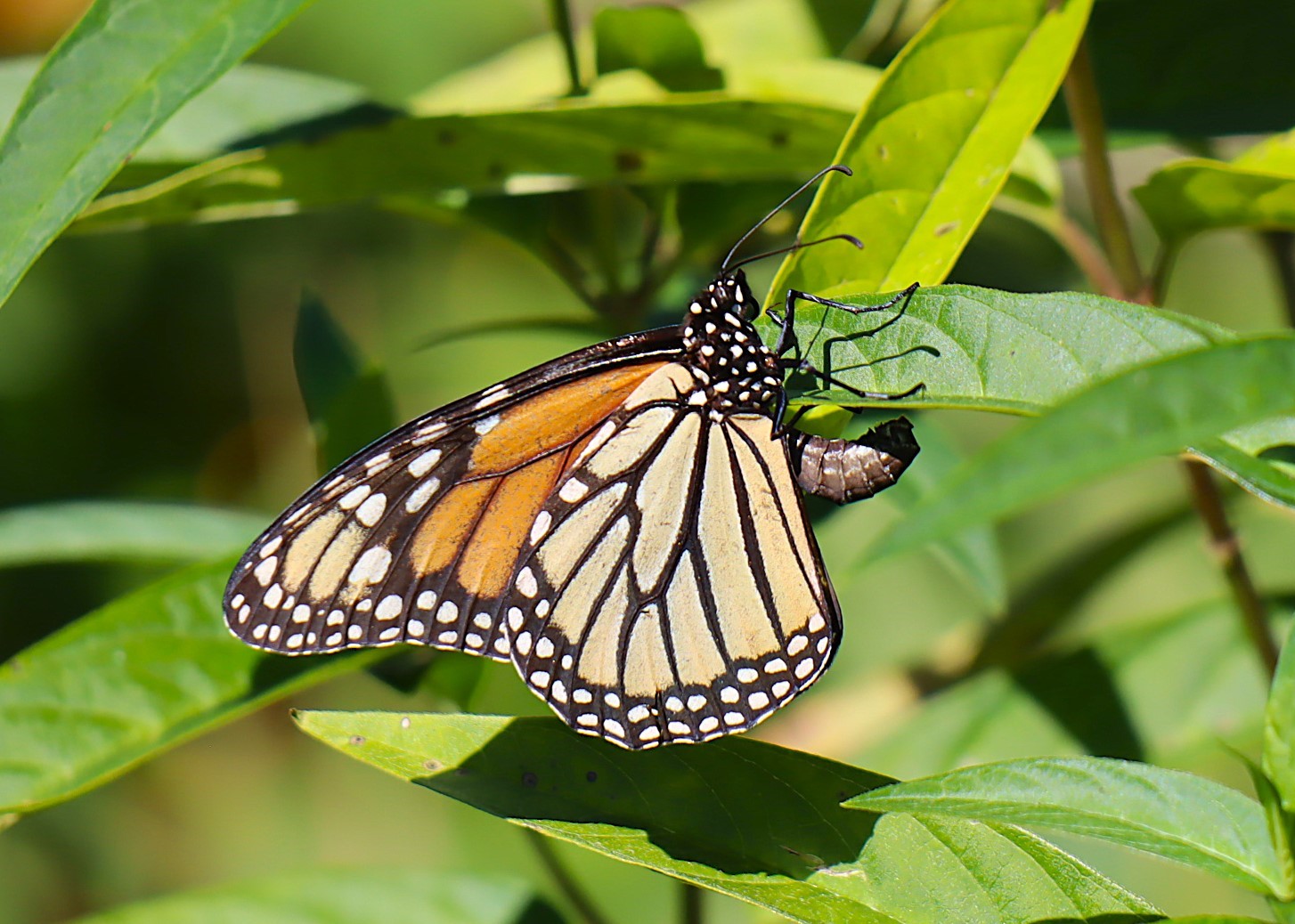
Looking to the future, it would be useful to establish a registry of residents who have planted, are planting, or are willing to plant native plants crucial for the survival of Monarchs. Being in communication with these individuals would help gauge numbers moving forward. Encouraging these efforts and launching a public relations campaign to get others to commit to planting native plants would be beneficial.
At Monarch Point Conservation Reserve, there is hope to advocate for the remediation of the "meadow" at Point Petre by eliminating invasive species and boosting the population of native plants like Common Milkweed, Goldenrods, and New England Aster.
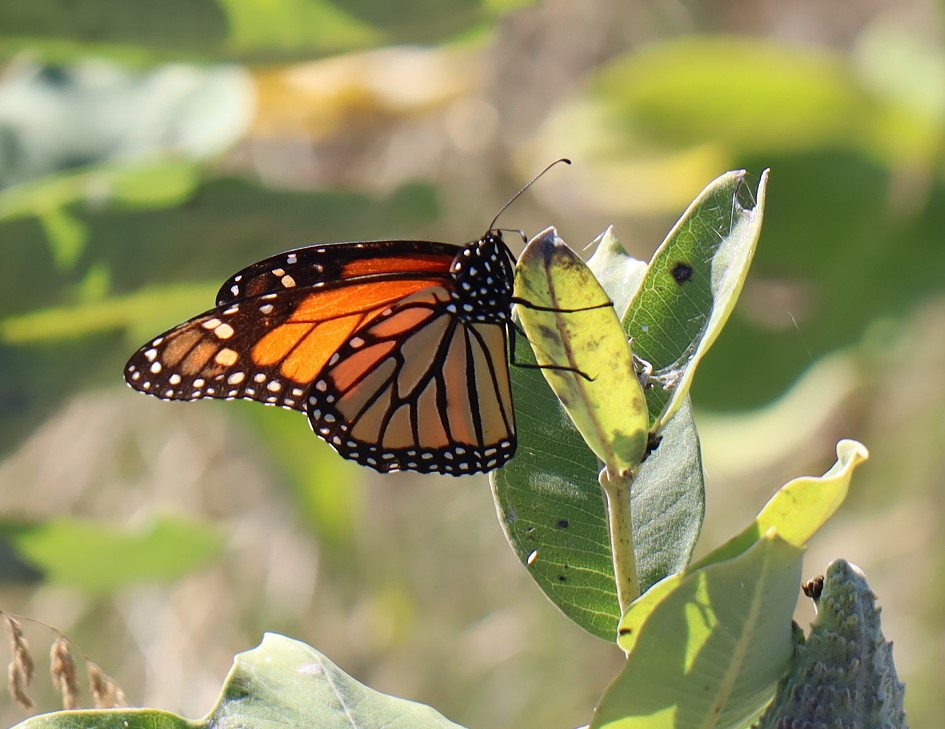
You can help by planting more native plants to help Monarchs! By planting Common Milkweed for caterpillars and flowering native plants such as Goldenrod and New England Aster, you can fuel the Monarchs' journey to their overwintering grounds in Mexico. Your efforts can make a significant difference in preserving this iconic species.
Do you like this page?
